
People Give More When They Know Why Their Work Matters
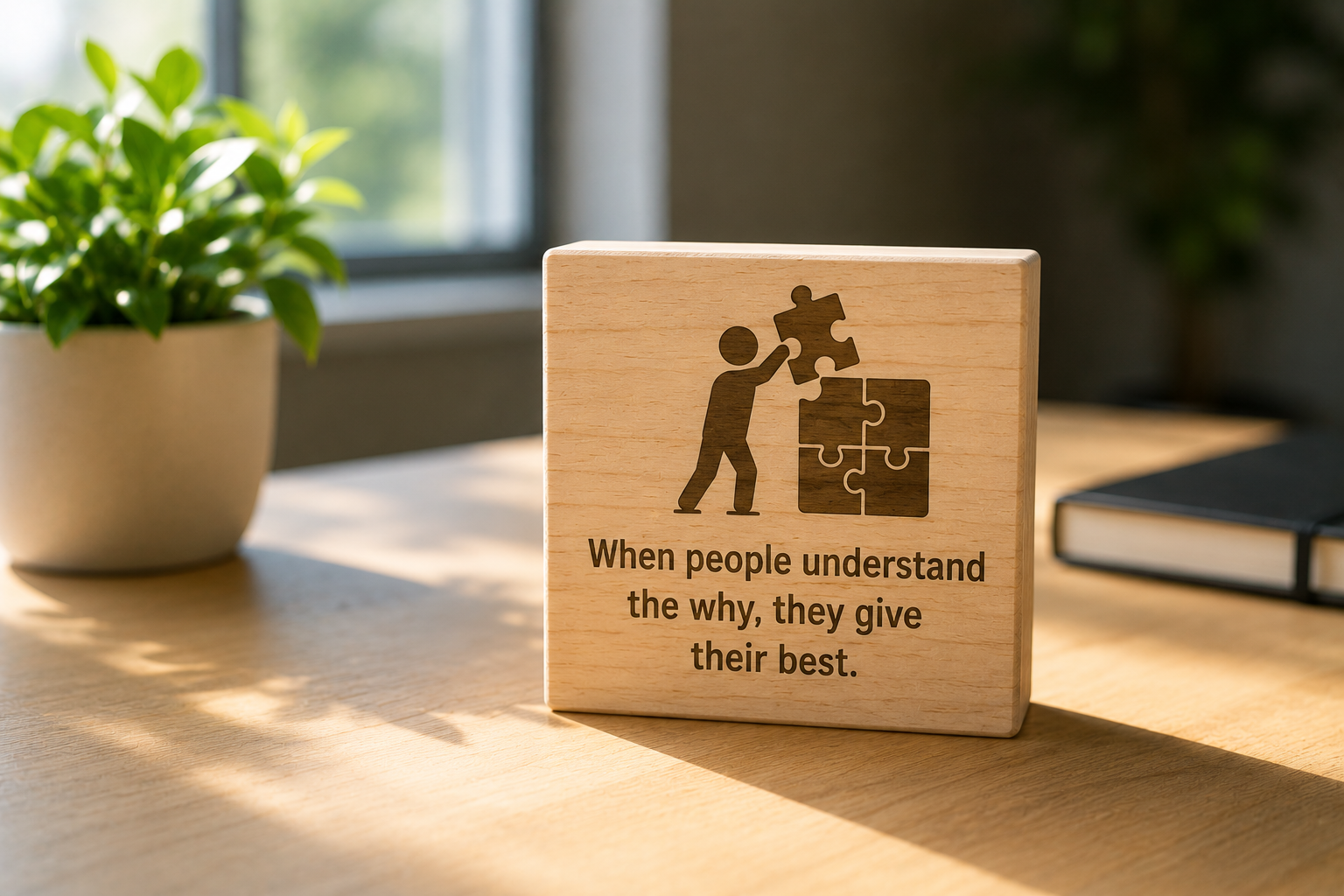
Most employees know what they are expected to do each day. Far fewer fully understand why their work matters or how it contributes to the organization's success. Yet that understanding is one of the most powerful drivers of engagement, commitment, and performance.
Gallup research consistently shows that employees who feel connected to their organization's mission and purpose are significantly more engaged, while highly engaged teams achieve stronger productivity, profitability, customer satisfaction, and retention. When people understand how their individual responsibilities help customers, coworkers, and the organization succeed, their work becomes more than a list of tasks—it has meaning.
Supervisors play the key role in creating that understanding. A job description explains what to do. Leadership conversations explain why it matters. They help employees see how quality, safety, customer service, teamwork, and continuous improvement all connect to the organization's goals. As work changes, priorities shift, or new challenges arise, supervisors who communicate openly help employees understand not only what is changing, but why those changes matter. Questions, discussion, and regular feedback replace assumptions with clarity and build trust.
Employees who understand the purpose behind their work are more likely to make good decisions, solve problems, take initiative, and remain committed during difficult times. They also appreciate knowing that their organization is willing to invest in their future through learning and career development opportunities, even if promotion is not immediate.
When supervisors consistently connect daily work to a larger purpose through meaningful conversations, employees gain direction, confidence, and motivation. They don't simply complete tasks—they understand the difference they make. And that understanding creates a workplace where engagement, performance, and retention naturally grow.
Need Help with a Difficult Workplace Conversation?
Great leadership doesn't happen by accident—it happens one conversation at a time.
You Don't Need to Go It Alone.
Bring your workplace people challenges to the FREE Workplace Conversations Clinic on August 17. Gain insights from Cathie Leimbach and other attendees as you explore practical ways to handle the situations you're facing.
Register here for the FREE Workplace Conversations Clinic
Conversation is where leadership happens.

