The Futility of Leadership Perfection

Cathie Leimbach • May 26, 2026

Many leaders quietly carry the pressure that they are supposed to have every answer. 

Be decisive.
Stay strong.
Never show uncertainty.
Keep pushing forward no matter what. 

The problem is that approach often creates distance inside organizations instead of trust. 

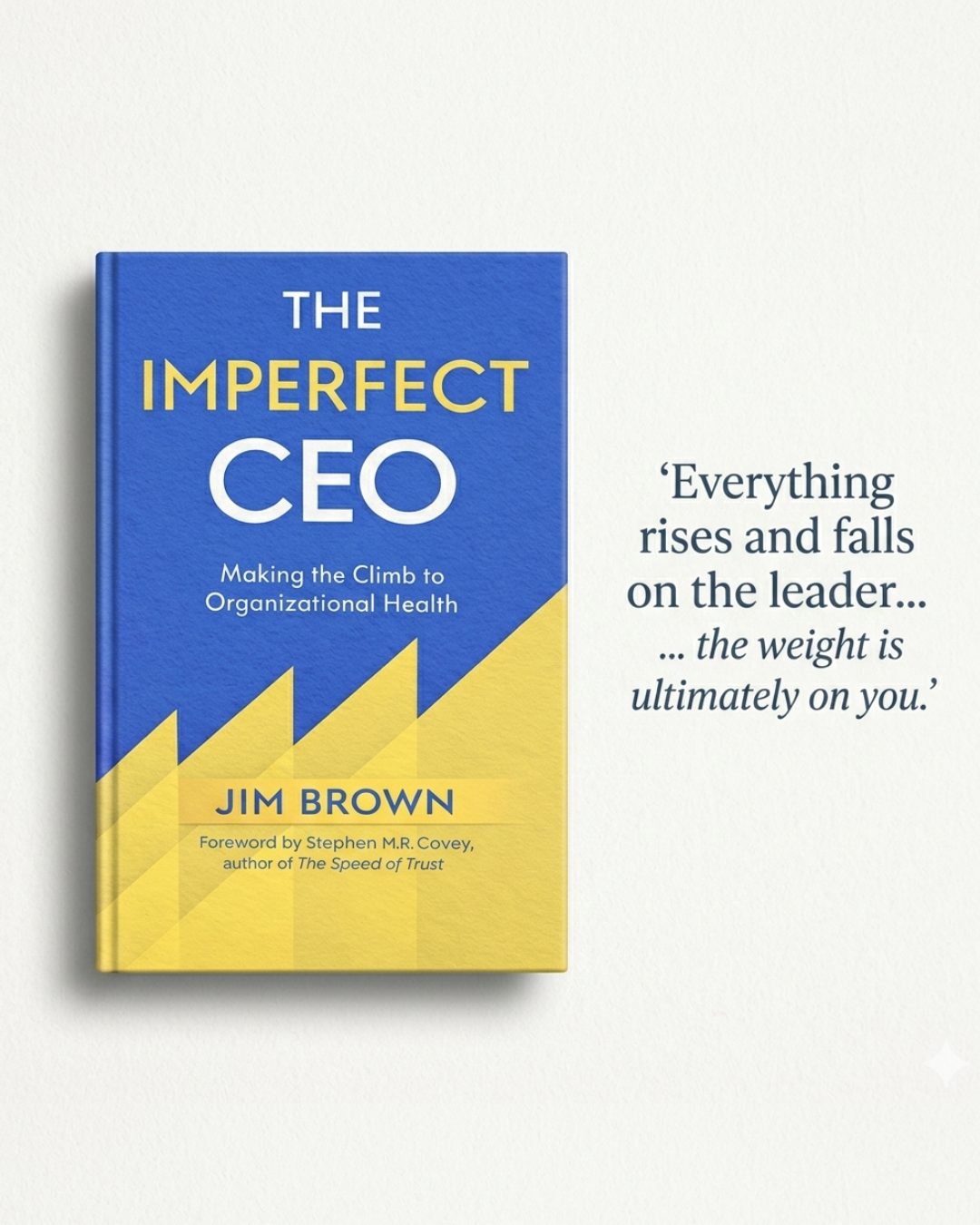
In The Imperfect CEO, which was released on May 19, Jim Brown challenges the idea that leadership effectiveness comes from appearing flawless. Instead, he makes the case that healthy organizations are built by leaders willing to lead with clarity, humility, accountability, and honesty. 

Larry Siff, CEO of Neptune Advisors and C-Level Community, shared this perspective: 

“In The Imperfect CEO, Jim Brown doesn’t shy away from the messy reality of being a real person in charge, yet he shows how that honesty becomes a source of organizational health.” 

Edna Lopez, former Senior Executive at Gateway and Amway, wrote: 

“In every organization I've led, one truth has been constant: culture determines whether strategy ever sees daylight. The Imperfect CEO gets to the heart of that reality.” 

That connection between leadership and culture is exactly why the ideas in this book matter. 

In Conversational Management, we often see organizations struggle, not because leaders lack intelligence or effort, but because communication patterns quietly create confusion, defensiveness, disengagement, or fear. 

The healthiest organizations usually are not led by leaders who are aiming for perfection. 

They are led by leaders who know perfection is elusive.  They acknowledge their limitations and the benefits of team collaboration.  They humbly create honest conversations, clear expectations, accountability, and trust — even when it feels uncomfortable. 

The wait is over for a down-to-earth book that dares to reveal common leadership imperfections and provides support for enhancing leadership impact! The Imperfect CEO is now available! 

By Cathie Leimbach May 19, 2026
Many organizations assume their biggest challenges are rapidly changing technology, customer retention, and employee initiative. But quite often, the root cause is people leadership problems. That’s one reason The Imperfect CEO by Jim Brown is so timely. Releasing today, May 19, the book explores how leaders build healthier organizations not by pretending to have all the answers, but by creating cultures grounded in trust, clarity, accountability, and meaningful conversations. Brian Besanceney, Chair, Board of Orlando Health, Inc., described the book this way: “Through vivid stories, real-world examples, and a model grounded in collaborative culture, Jim Brown gives leaders permission to wrestle honestly with the generational divides, misaligned targets, and cultural fractures that can too often sabotage high-potential organizations.” Greg Apple, CEO of Amgine.ai, connected the book to leadership beyond business alone: “In a fast-moving company, culture is everything. Jim Brown’s principles have helped our team lead with greater clarity and alignment. The Imperfect CEO distills those lessons brilliantly. Every leader should read it.” What stands out to me is how closely this book aligns with the principles behind Conversational Management. Healthy cultures are rarely built through policies alone. They are built through the quality of everyday leadership conversations — how expectations are clarified, how accountability is handled, how feedback is delivered, and how trust is strengthened over time. That’s why leadership development cannot stay theoretical. Culture changes conversation by conversation.  The Imperfect CEO is an easy-to-read business fable that illustrates common people leadership challenges and provides suggestions for overcoming them. Order your copy today and start building healthier leadership conversations inside your organization.
By Cathie Leimbach May 12, 2026
Chick-fil-A restaurants often receive far more job applications than they have openings. This is not luck. It is leadership. People apply where they believe they will be treated well. At Chick-fil-A, employees experience respectful communication, clear expectations, and leaders who support their success. That reputation spreads quickly through word of mouth. Leaders in these restaurants do simple things well. They ask questions before they assume. They listen to employees. They provide encouragement and clear direction. They notice good work and address problems in a helpful way. As a result, employees feel valued. They enjoy coming to work. They tell others. That is what attracts more applicants. Many organizations focus only on hiring. Strong organizations focus on how people are treated after they are hired. When leaders create a workplace where people feel respected, supported, and clear on what success looks like, something powerful happens: People stay. People perform. And more people want to join. This is what leadership really is. Would you like to see several leadership and culture practices Chick-fil-A uses to attract and keep quality employees? Click here to view: How Chick-fil-A Attracts Quality Applicants