The Leadership Problem Most Companies Don’t Address
Cathie Leimbach • May 19, 2026

Many organizations assume their biggest challenges are rapidly changing technology, customer retention, and employee initiative. 

But quite often, the root cause is people leadership problems. 

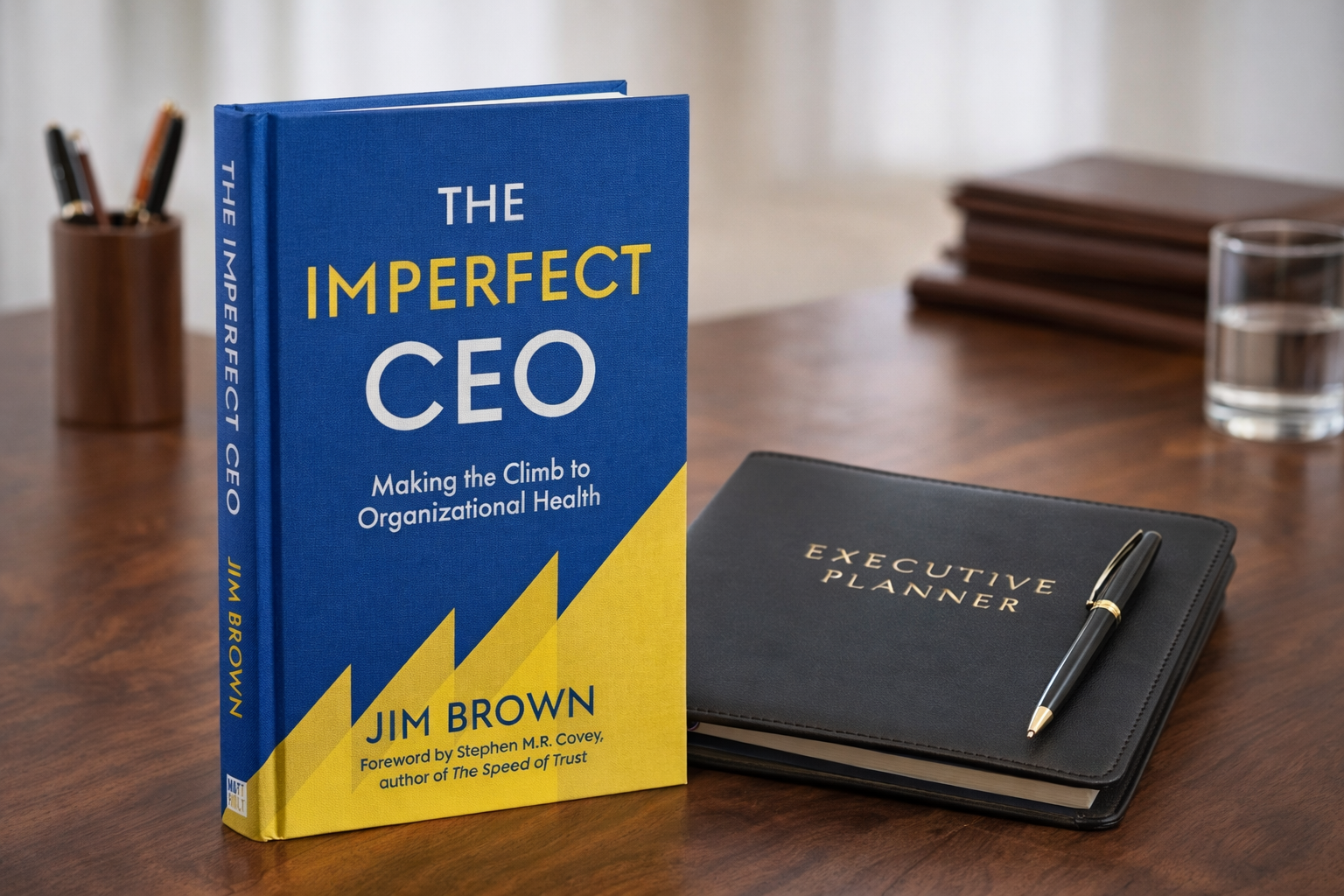
That’s one reason The Imperfect CEO by Jim Brown is so timely. Releasing today, May 19, the book explores how leaders build healthier organizations not by pretending to have all the answers, but by creating cultures grounded in trust, clarity, accountability, and meaningful conversations. 

Brian Besanceney, Chair, Board of Orlando Health, Inc., described the book this way: 

“Through vivid stories, real-world examples, and a model grounded in collaborative culture, Jim Brown gives leaders permission to wrestle honestly with the generational divides, misaligned targets, and cultural fractures that can too often sabotage high-potential organizations.” 

Greg Apple, CEO of Amgine.ai, connected the book to leadership beyond business alone: 

“In a fast-moving company, culture is everything. Jim Brown’s principles have helped our team lead with greater clarity and alignment. The Imperfect CEO distills those lessons brilliantly. Every leader should read it.” 

What stands out to me is how closely this book aligns with the principles behind Conversational Management. 

Healthy cultures are rarely built through policies alone. They are built through the quality of everyday leadership conversations — how expectations are clarified, how accountability is handled, how feedback is delivered, and how trust is strengthened over time. 

That’s why leadership development cannot stay theoretical. 

Culture changes conversation by conversation. 

The Imperfect CEO is an easy-to-read business fable that illustrates common people  leadership challenges and provides suggestions for overcoming them. Order your copy today and start building healthier leadership conversations inside your organization. 

By Cathie Leimbach May 12, 2026
Chick-fil-A restaurants often receive far more job applications than they have openings. This is not luck. It is leadership. People apply where they believe they will be treated well. At Chick-fil-A, employees experience respectful communication, clear expectations, and leaders who support their success. That reputation spreads quickly through word of mouth. Leaders in these restaurants do simple things well. They ask questions before they assume. They listen to employees. They provide encouragement and clear direction. They notice good work and address problems in a helpful way. As a result, employees feel valued. They enjoy coming to work. They tell others. That is what attracts more applicants. Many organizations focus only on hiring. Strong organizations focus on how people are treated after they are hired. When leaders create a workplace where people feel respected, supported, and clear on what success looks like, something powerful happens: People stay. People perform. And more people want to join. This is what leadership really is. Would you like to see several leadership and culture practices Chick-fil-A uses to attract and keep quality employees? Click here to view: How Chick-fil-A Attracts Quality Applicants
By Cathie Leimbach May 5, 2026
What If Your Biggest Performance Problem Isn’t What You Think? When CEOs think about risk, they often focus on: Market shifts Operational issues Financial exposure But one of the biggest performance problems is far less visible: Low trust inside the organization. Nearly 30% of employees say they don’t receive clear, honest, or consistent communication from leadership. Over time, that creates doubt—about expectations, personal performance, and priorities. Employees begin to feel that their job is at risk because they aren’t getting any positive feedback. They question whether they have the tools, training, and support needed to do their jobs well. When they only hear about changes at work through the rumor mill, they feel information is being held back. And when that happens: Alignment drops Speed slows Assumptions increase Execution fractures “Trust is the glue of life. It’s the most essential ingredient in effective communication. It’s the foundational principle that holds all relationships.” — Stephen R. Covey Trust isn’t soft. It’s a leading indicator of performance. When trust is strong: Decisions move faster Teams align quicker Change sticks When trust is weak: Everything takes longer Everything costs more And here’s the reality : Trust-building conversations are not a common leadership strength today. Yet leaders like Ken Blanchard, Stephen M.R. Covey, and David Horsager all point to the same conclusion—these are not optional skills. They are required for performance in today’s environment. Which means trust gaps are rarely about effort. They’re about conversation skills. A question to consider: Where might low-trust leadership behaviors—not lack of effort—be quietly slowing your organization down? Join Cathie Leimbach and a small group of leaders for a 45-minute Leadership Conversation – Workforce Challenges on Tuesday, May 12 at 3:00 PM ET. If trust is impacting speed, alignment , or execution in your organization, this conversation is for you. Register here Limited to a small group.