What Problems Disappear When Leadership Gets Stronger?
Cathie Leimbach • April 14, 2026

Most workplace issues don’t start big.
They build slowly—through missed conversations, unclear expectations, and more people leave. 


That’s where disengagement shows up. 


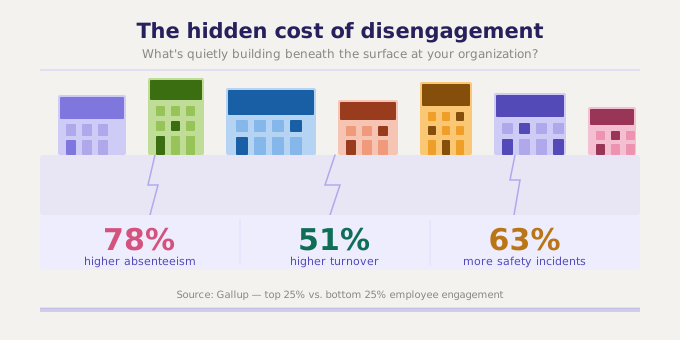
And when it does, the cost is real: 

  • 78% higher absenteeism 
  • 51% higher turnover 
  • 63% more safety incidents 


These differences come from comparing the 25% of organizations with the strongest employee engagement to those in the bottom 25% (Gallup).   


And across the U.S., the bigger picture is hard to ignore—disengaged employees cost organizations nearly $2 trillion annually in lost productivity (Gallup). 


These aren’t just HR problems.
They’re leadership problems. 


When people don’t feel connected, clear, or supported: 

  • They call off more 
  • More people quit
  • Mistakes and risks increase 


The good news?
These patterns are preventable. 


Strong leaders reduce these issues by: 

  • Addressing problems early 
  • Creating clarity instead of assumptions 
  • Having consistent, direct conversations 
  • Reinforcing expectations before things drift 


It’s not about doing more.
It’s about leading differently—every day. 


A question to consider: 
Which of these challenges is quietly costing your organization the most right now? 


👉 Join our upcoming Leadership Conversation on April 27th, 3:00 PM—this is not a webinar

This is a candid conversation with leaders comparing their employee engagement challenges and successes.   


Most organizations are tolerating more of this than they realize. 
The question is—are you?


By Cathie Leimbach July 28, 2026
From uncertainty to confident, supportive leadership conversations
By Cathie Leimbach July 21, 2026
There was a time when many employees expected to spend most of their careers with one organization. Job security, pensions, and long-term loyalty often kept people in the same company for decades. Today's workforce thinks differently. Millennials and Gen Z expect to build careers—not necessarily with one employer. If they don't see opportunities to learn, grow, contribute, and advance, they'll find them somewhere else. Research consistently shows that younger employees are looking for more than a paycheck. They want managers they trust, meaningful work, opportunities to develop, flexibility when possible, and a workplace where they feel respected, supported, and heard. Gallup reports that 87% of Millennials say professional development is important to their job satisfaction. Combined with growing expectations for work-life balance and a positive workplace culture, it's no surprise that organizations relying primarily on compensation to retain employees continue to struggle with turnover. The encouraging news is that leaders influence most of what keeps people engaged.  Managers who hold meaningful conversations, clarify expectations, recognize contributions, coach for growth, and genuinely care about their employees create workplaces where people want to stay. They build trust, strengthen engagement, and help employees grow, succeed, and see a future with the organization. Today's retention isn't driven by job security or loyalty alone. It's driven by a workplace experience where employees are growing, supported by leaders they trust, and confident their contributions matter. Download our Retention Conversation Guide to discover practical ways to strengthen trust, engagement, and retention—one leadership conversation at a time. Conversation is where leadership happens.