What’s Really Driving Employee Detachment?
Cathie Leimbach • April 21, 2026

Most leaders don’t struggle because they don’t care.
They struggle because the root causes of disengagement are easy to miss. 

Right now, many employees are emotionally detached from their workplaces—and a majority are still watching for their next opportunity. But this isn’t about perks or pay. 

It’s about something more foundational. 

Less than half of employees clearly know what’s expected of them. Even fewer feel encouraged to grow, connected to purpose, or heard at work. 

Those aren’t surface issues.
They’re leadership gaps. 

And they show up in everyday conversations. 

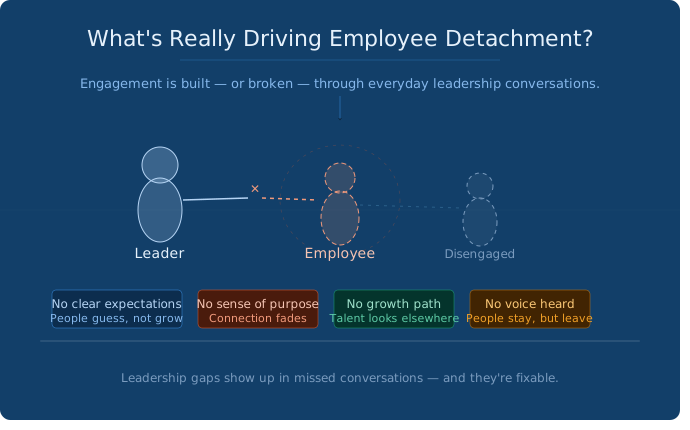
Engagement is built—or broken—through how leaders communicate expectations, opportunities, purpose, and voice. 

For example: 

  • When expectations aren’t clear, people guess and stay busy—and performance suffers.
  • When employees don’t see how their work matters, connection fades.
  • When leaders don’t ask for employees’ perspectives, people disengage—even if they stay. 

These aren’t big system failures.
They’re missed conversations. 

The good news?
What causes detachment is also what fixes it. 

Where could clearer, more intentional leadership conversations reconnect your team? 


Look at your last two workplace culture or employee engagement surveys.
What do they show about how well your leaders meet employee needs?
Where are leaders falling short? 

How do these strengths and gaps affect your bottom line?
How long are you willing to accept the underperformance that follows? 

Your Next Step:  Click here to book a free conversation with Cathie Leimbach about discovering and/or closing leadership gaps in your organization.


By Cathie Leimbach April 14, 2026
Most workplace issues don’t start big. They build slowly—through missed conversations, unclear expectations, and more people leave. That’s where disengagement shows up. And when it does, the cost is real: 78% higher absenteeism 51% higher turnover 63% more safety incidents These differences come from comparing the 25% of organizations with the strongest employee engagement to those in the bottom 25% (Gallup). And across the U.S., the bigger picture is hard to ignore— disengaged employees cost organizations nearly $2 trillion annually in lost productivity (Gallup). These aren’t just HR problems. They’re leadership problems. When people don’t feel connected, clear, or supported: They call off more More people quit Mistakes and risks increase The good news? These patterns are preventable. Strong leaders reduce these issues by: Addressing problems early Creating clarity instead of assumptions Having consistent, direct conversations Reinforcing expectations before things drift It’s not about doing more. It’s about leading differently—every day. A question to consider: Which of these challenges is quietly costing your organization the most right now? 👉 Join our upcoming Leadership Conversation on April 27th, 3:00 PM—this is not a webinar . This is a candid conversation with leaders comparing their employee engagement challenges and successes.  Most organizations are tolerating more of this than they realize. The question is—are you?
By Cathie Leimbach April 7, 2026
Most leaders don’t struggle because they don’t care. They struggle because engagement feels hard to influence. But when people are engaged, the impact is hard to ignore: 18% higher sales 23% higher profitability 70% higher wellbeing These differences come from comparing the 25% of organizations with the strongest employee engagement to those in the bottom 25% (Gallup). And the stakes are bigger than most realize— disengaged employees cost U.S. organizations nearly $2 trillion in lost productivity each year (Gallup). This isn’t about perks or programs. It’s about how people are led every day. Engaged teams are clearer on expectations. They feel supported. They know their work matters. And most importantly—those conditions don’t happen by accident. They’re created in conversations: Clarifying priorities Reinforcing what good looks like Checking for understanding Following through consistently Small leadership habits drive big business outcomes. A question to consider: Where could stronger day-to-day leadership conversations improve results in your team? 👉 Join our next 60-minute Leadership Conversation: Inspiring High Performance — Monday, April 27 th at 3:00 PM ET (this is not a webinar) It’s a small-group discussion with other leaders looking at a simple question: What’s actually driving engagement—and what’s quietly holding it back?  If a shift in leadership could impact sales, profitability, and wellbeing… it’s worth exploring what that might look like in your world.