Communication Gaps
Cathie Leimbach • February 24, 2026

Most communication problems don’t happen because people aren’t listening. They happen because leaders assume clarity instead of checking for it.
“I think they get it” isn’t the same as “they really do.”
When people don’t clearly understand what’s expected of them, they make their own assumptions to fill in the gaps. That’s when rework, missed deadlines, and frustration show up.
Strong leaders ask better questions:
- What do you see as the top priority?
- What does success look like to you?
- What could get in the way?
These don’t slow work down — they prevent costly resets later.
Try a simple weekly habit:
- Think about one key conversation.
- What did I mean?
- What did they hear?
- Where was the gap?
Small awareness leads to big gains.
👉 You’re invited to a Leadership Conversation with other leaders to discuss common leadership gaps and how they quietly influence results.

“All good,” they said. But Sarah wasn’t so sure. In the team meeting, just two people did most of the talking. Team members who once offered ideas just waited for the meeting to end. Three people called in 'sick' on the day of our monthly planning and progress-review meeting. Today was just another day with her disengaged team. Sarah realized that whenever she asked others how things were going, she got the same response: “All good.” It never failed that within a day or two of what seemed like positive feedback, a problem surfaced. It might be that they didn't know how to proceed with a new project. Or they were trying to hide a mistake they made. Things definitely were not "All Good". Then, she thought about the questions she usually asked. “Everything on track?” “Will that be ready by Friday?” She wanted to know how her people were progressing with their work. But she had asked closed-ended questions, so she got brief responses that told her nothing. At her next one-to-one, she asked, “How have things been for you lately?” “Fine. Busy.” She almost moved on. But, instead, she dug a bit deeper. “What’s been making things especially busy?” This time, the answer was different. There were competing demands she hadn’t known about. A concern that had gone unspoken. And a feeling that nobody really talked anymore unless they needed help with something urgent. This one conversation provided important information. It gave her a place to start moving forward to improve engagement and results. If you can relate to Sarah's struggles, here are some tips to help you stay on top of how your employees' work is truly going. Absenteeism and disengagement can have many causes. We can't begin to understand them by accepting thoughtless answers. We need to create an environment where people feel comfortable sharing what’s really happening. Interpersonal rapport is essential. It grows through small moments: asking a thoughtful question, listening without rushing to solve a concern, remembering what someone said, and checking back. This week, try asking a couple of specific open-ended questions such as: “What’s been going well for you?" And "What’s been difficult?” Let the answers guide your next questions. Give the person room to share. Then, a few days later, follow up. “You mentioned the client report deadline was going to be hard to meet. How’s it going?” Then, "What help do you need?" When you take a few minutes for such check-ins, employees feel more supported than if you just ask, “How are you?”, as you are walking by. It indicates: I heard your concern. I remembered. I’m interested. I want you to succeed. Your team members are more likely to get involved, be honest with you, and share ideas when they feel heard and connected to the people they work with. Want to get more comfortable starting those conversations? Join our Workplace Conversations Clinic on October 19 to practice building interpersonal rapport through conversations that matter. Reserve your place → [registration link]
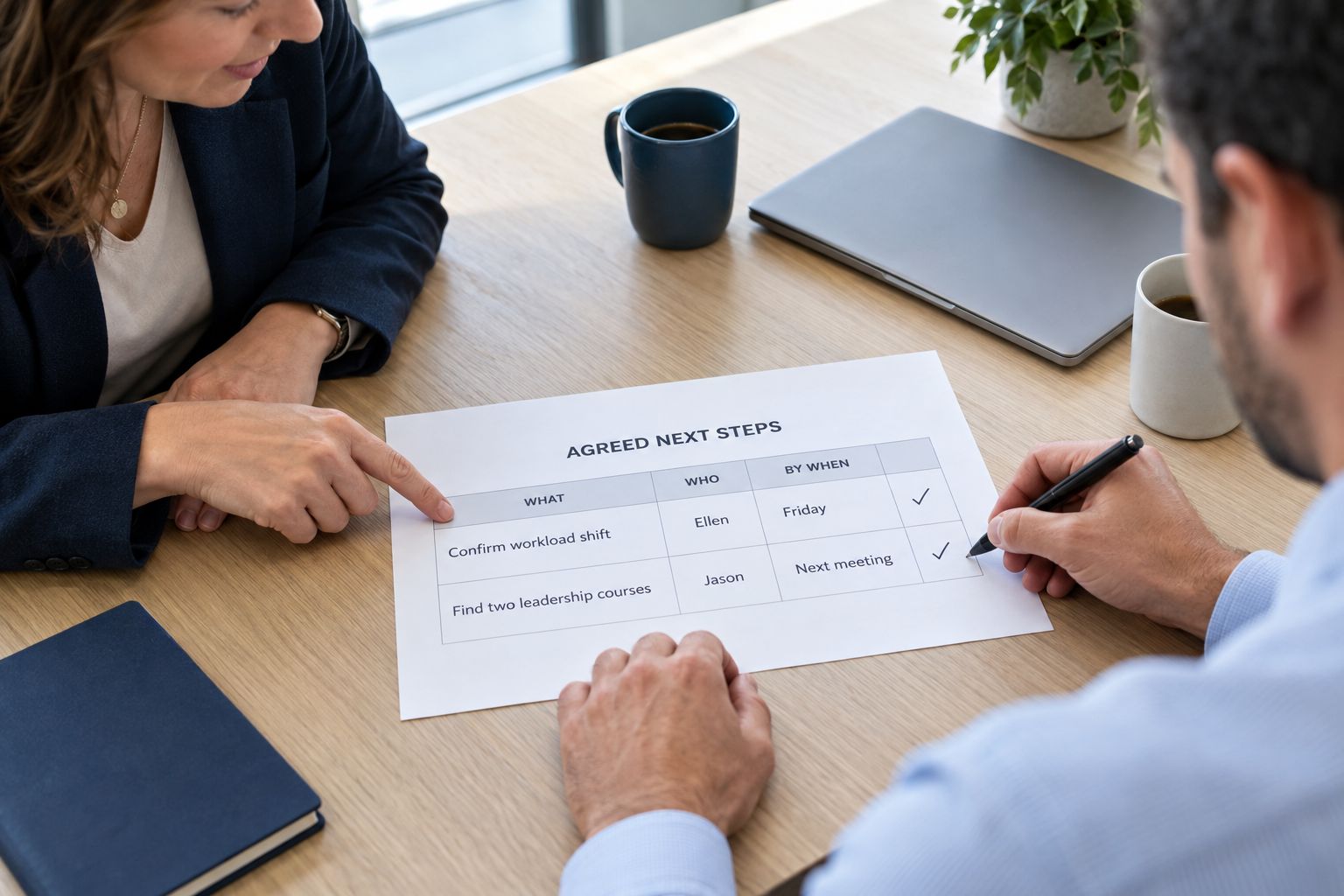
Jason left his one-on-one feeling encouraged. His supervisor, Ellen, had listened as he described competing deadlines and his interest in becoming a team leader. They talked about the possibility of shifting some of his workload. Ellen also suggested that training might help him prepare for a leadership role. "Let's work on that," she said. Jason thought help was coming. Ellen thought Jason would bring her a plan. Two weeks later, the deadlines were closer. Nothing had been reassigned. Neither had looked into training. During their next one-on-one, Ellen asked how things were going. "I'm still waiting to hear which project you want me to focus on," Jason said. "I thought we agreed that you would work that out." "And the leadership training?" "Did you find a course?" Jason paused. "I thought you were going to recommend one." They had discussed the same topics. They had left with different expectations. Neither intended to let the other down. But they hadn't agreed on who would do what, or when. Turn a Good Conversation into Clear Next Steps Listening matters. So does what happens after you listen. Before you end your next one-on-one, take a few minutes to make sure you and your employee understand what comes next. Talk about priorities. If everything can't be done at once, agree on what comes first. Ask what might get in the way, and what support would help. Make room for professional growth, too. What does the employee want to learn? What responsibility would they like to prepare for? Identify a step you can each take to move that development forward. Then write down your agreements. Keep the notes simple: what needs to happen, who will do it, and by when. Include your own commitments. Putting It Into Practice Ellen and Jason tried again. "The client proposal comes first," Ellen said. "I'll talk with Marcus today about taking over the weekly report. By Friday, I'll let you know whether he can." "I'll find two leadership courses before our next meeting," Jason said. "Then we can talk about which one fits." Both Jason and Ellen knew what to do next. The following week, both reported their findings and they made decisions on how to move forward. Jason’s work became more aligned with Ellen’s departmental goals. Jason felt valued and appreciated. Their weekly one-to-ones became the backbone of their workplace success. Want to Make Your Workplace Conversations More Productive? Join us for the Workplace Conversations Clinic on October 19 . Bring a conversation you want to handle more effectively, and let's work on making the next steps clear. Register Here
